
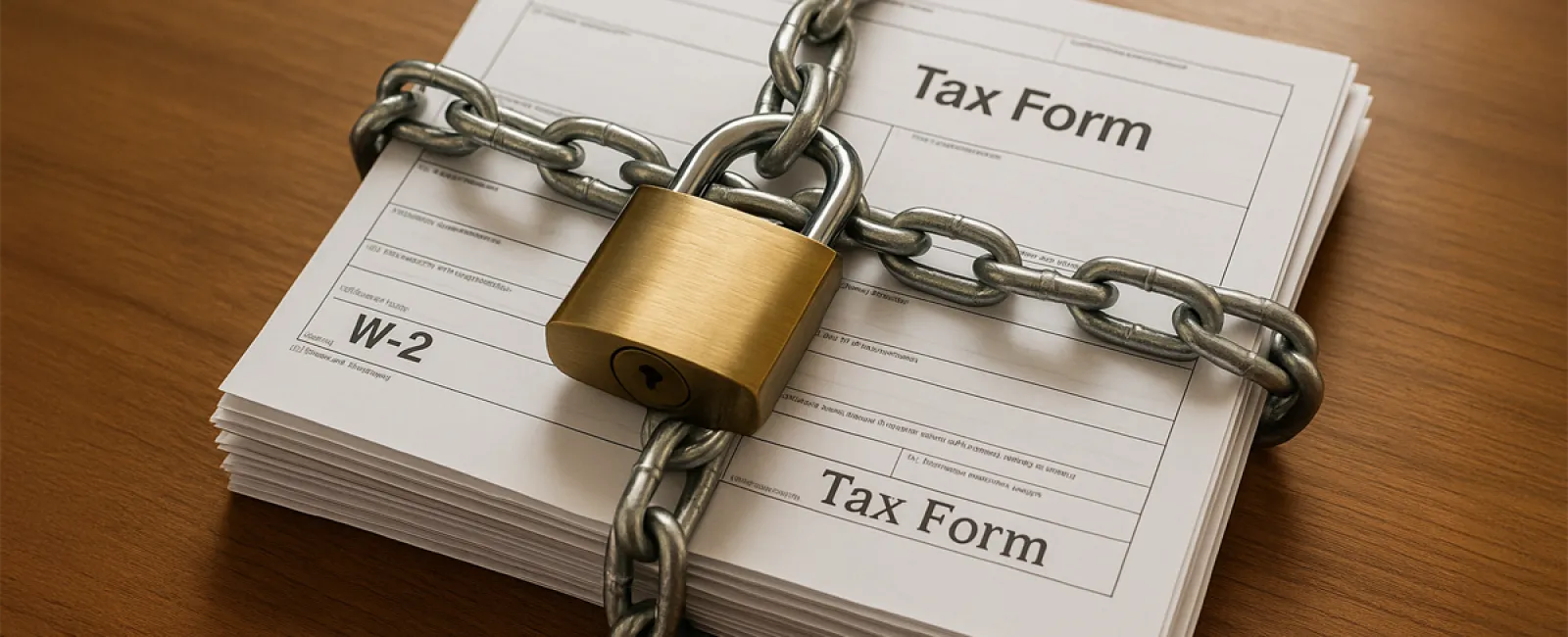
It's February, and tax season is in full swing. Accountants are busier than ever, bookkeepers are scrambling to gather documents, and everyone's focused on W-2s, 1099s, and looming deadlines.
But here's what's often overlooked: the first major tax season headache usually isn't a form—it's a scam.
This particular fraud targets small businesses early on because it's simple, credible, and likely already lurking in an employee's inbox.
Understanding the W-2 Scam
The scenario goes like this:
An employee responsible for payroll or HR receives an email that appears to come from the CEO, owner, or senior executive.
The message is brief and urgent:
"I need copies of all employee W-2s for an upcoming accountant meeting. Please send them ASAP—I'm swamped today."
The email seems legitimate. The tone is appropriate, the urgency plausible during tax season, and the request reasonable.
Trusting this, the employee forwards the W-2s.
However, the email wasn't from the CEO—it was sent by a fraudster using a spoofed address or a deceptive domain.
Now, the scammer possesses every employee's:
• Complete legal name
• Social Security number
• Home address
• Salary details
All the critical information needed for identity theft or filing fake tax returns before employees can.
The Consequences of Falling Victim
Typically, victims discover the scam when:
An employee files their tax return, only to have it rejected because "a return has already been filed using this Social Security number."
Someone else has fraudulently submitted in their name and claimed the refund.
Suddenly, your employee is burdened with IRS investigations, credit monitoring, identity theft protections, and a lengthy cleanup process—all from a document they unknowingly released.
Multiply this risk across your entire payroll, and imagine breaking the news that personal data was compromised because of a fake email.
This isn't just a security breach; it's a trust crisis, a serious HR challenge, a legal risk, and a threat to your company's reputation.
Why This Scam Is So Effective
This is no obvious phishing email promising millions or free inheritances.
Its success lies in:
The timing matches tax season expectations. Requests for W-2s in February don't raise eyebrows.
The request is measured and believable—not unusual financial demands like wiring money or buying gift cards.
The urgency is natural. "I'm flooded today, please send this quickly" sounds normal in busy offices.
The sender appears authentic. Scammers research targets extensively, mimicking executive names and even accountants to craft convincing emails.
Employees want to be helpful, especially responding promptly to leadership requests, so urgency often overrides caution.
Practical Steps to Shield Your Business
The silver lining: you can stop this scam before it starts by combining clear policies with a strong company culture.
Establish a strict "no W-2s via email" rule—no exceptions. Sensitive payroll documents must never be sent as email attachments. If requested by email, the answer is an emphatic "no," even if the request seems to come from the CEO.
Validate sensitive requests through a second channel—call, in-person verification, or company chat—not by replying to the original email. Use known phone numbers or contacts outside the email. This quick step can save months of recovery.
Hold a brief tax scam awareness meeting now—not later. Alert payroll and HR teams: scams spike during this time, here's how to recognize and respond.
Strengthen security on payroll and HR systems with multi-factor authentication (MFA) for all employee data access. MFA helps prevent hackers from exploiting stolen credentials.
Foster a workplace culture where verifying requests is encouraged, not discouraged. Employees who double-check a "boss's" demand deserve praise. When questioning is welcomed, scams lose their impact.
Implementing these five straightforward rules this week is powerful enough to block the initial wave of impostor scams.
Looking Beyond the W-2 Scam
The W-2 scam is just the tip of the iceberg.
Throughout tax season, be on the lookout for a surge of tax-related fraud attempts, including:
• Bogus IRS notices demanding immediate payments
• Phishing campaigns disguised as tax software updates
• Spoofed emails from "your accountant" containing harmful links
• Fake invoices that mimic tax-related expenses
Cybercriminals exploit tax season chaos, banking on rushed decisions and financial requests appearing routine.
Businesses that navigate tax season unscathed aren't lucky—they're prepared with solid policies, employee training, and systems that flag suspicious activities before damage occurs.
Is Your Business Prepared?
If your company already enforces strong policies and your team is educated on threats, you're ahead of most small businesses.
If you haven't yet, the best time is now—not after the first scam hits.
Consider scheduling a free 15-minute Tax Season Security Check.
During this review, we'll examine:
• Payroll and HR system access controls and MFA
• Your company's W-2 verification procedures
• Email defense mechanisms that identify spoofing
• One critical policy adjustment often overlooked by businesses
If this doesn't apply to you, fantastic. But you likely know a business owner who would benefit. Share this article to help them avoid costly headaches.
Click here or give us a call at 920-818-0900 to schedule your free 15-Minute Discovery Call.
Because tax season is already stressful enough—don't add identity theft to the mix.


