
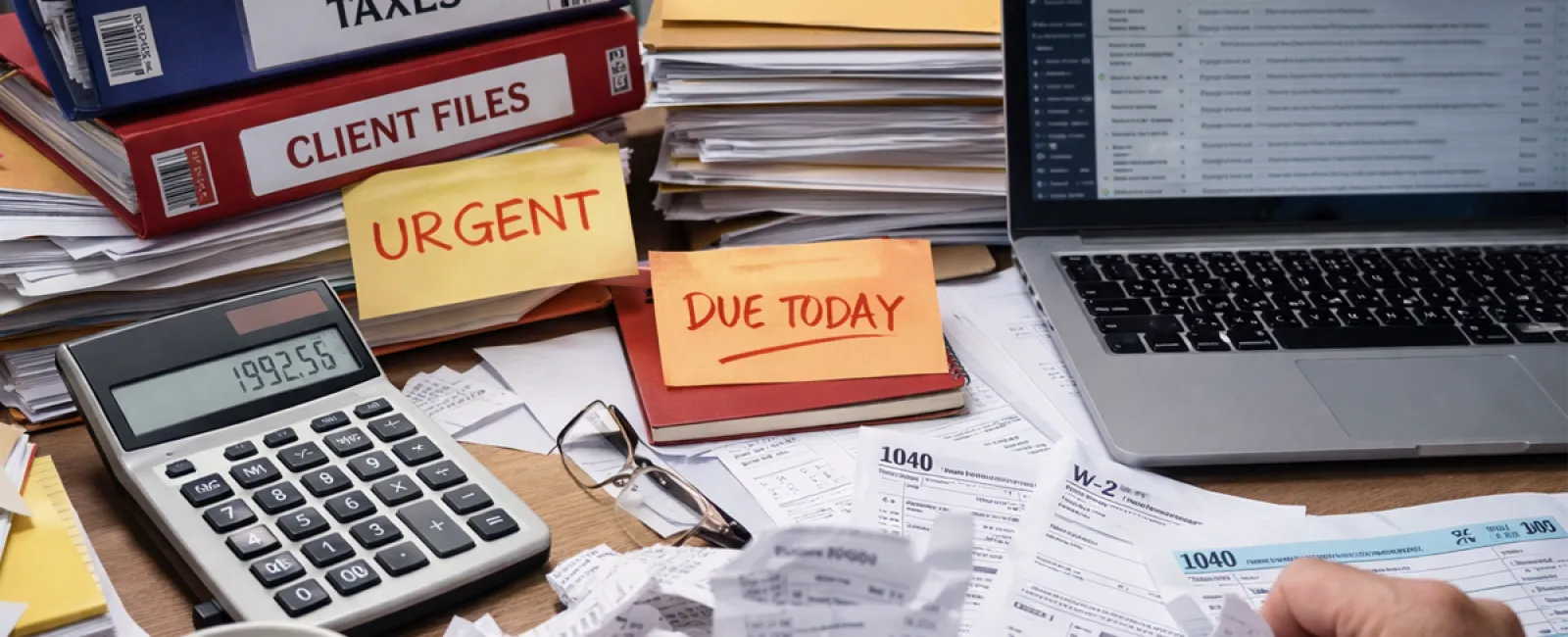
March signals the height of tax season.
Accountants are overwhelmed. Bookkeepers hustle to keep pace. Deadlines press hard. Your inbox floods with urgent emails.
Everyone is heads-down focused just trying to survive the month.
This scenario is all too familiar.
Yet, it's not just your team feeling the pressure—hackers are fully aware too.
Cybersecurity experts consistently report a sharp rise in phishing campaigns during tax season. March alone sees around a 28% jump in tax-related scam emails compared to quieter periods. These deceptive emails are carefully crafted to mimic routine business correspondence, striking when your team is most stretched.
This is no accident.
This is deliberate timing.
Let's explore the threats ahead and four powerful strategies to ensure hackers don't target your business.
Supply Chain Stress Amplifies Vulnerabilities
Many overlook this key insight:
Hackers aren't just focused on accounting offices.
They exploit the turbulence all around.
During tax season:
- Clients hastily send sensitive documents.
- Employees bypass standard verification steps under workload pressure.
- Requests like "Just send the file" replace usual caution.
- Verification processes are skipped because everyone is overwhelmed.
The entire system accelerates.
And speed invites mistakes.
Hackers zero in on busy, chaotic businesses—not calm, methodical ones.
March is a prime window.
Spotting Real Phishing Examples
This isn't fiction.
It's an email indistinguishable from your daily communications.
- "Your accountant" asks you to resend W-2s due to a missing document.
- A vendor claims their banking info changed and needs updating.
- A DocuSign request demands your signature on a tax form immediately.
- "Your CEO," traveling, urgently requests assistance.
None raise red flags.
They feel like legitimate March business.
That's why they succeed.
The Human Factor: Why Busy People Fall For Scams
It's not about carelessness.
It's about human nature.
When emails pile up and deadlines loom, people skim instead of scrutinizing. They fill in gaps with assumptions and often react quickly.
Scammers design their messages knowing this.
Their emails target busy minds that miss one suspicious detail. They don't need recklessness—just a hurried pace.
And March makes almost everyone rushed.
Four Key Tactics to Shield Your Business
Fortunately, you don't need advanced tools or a full security team to protect yourself.
Adopting a few intentional practices during busy seasons can dramatically lower risk.
1. Confirm Payment Changes with a Trusted Call
When you receive requests to update vendor banking info, don't reply to the email.
Instead, call the vendor using a phone number you already have on file.
This single step prevents many costly scams.
2. Pause on Urgent Requests for Sensitive Data
Urgency is a warning sign — slow down instead of rushing.
If someone demands immediate W-2s, tax files, or financial documents, pause to verify.
Genuine requests tolerate brief delays; scammers won't.
3. Validate "Urgent" Emails Through Alternate Channels
For emails that emphasize urgency, double-check with a call, text, or internal message.
A quick confirmation can block costly errors.
True urgency withstands a two-minute verification; fraud does not.
4. Brief Your Team on Scam Awareness
This week, remind your employees that tax season is peak scam season.
Encourage them to slow down, verify, and raise questions when something feels off.
This permission to be cautious can save time and headaches later.
In Summary
Tax season already creates enough pressure—don't add falling victim to scams to your worries.
The phishing attempts this time of year aren't particularly sophisticated—they are perfectly timed.
They depend on rushed decisions.
They depend on unchecked assumptions.
They capitalize on the surge of March activity.
You don't need to overhaul systems to stay safe.
Just pause, verify, and question when it counts.
Usually, that's all it takes.
Check Your Busy-Season Preparedness
Your business may already have strong routines—and if so, that's excellent.
But if tax season often pushes your team into reactive mode or you're uncertain how urgent requests are managed, a quick sanity check is invaluable. Schedule a free 15-Minute Discovery Call.
No high-pressure sales. Just straightforward advice on small habit shifts that can prevent big problems during tax season.
If this message doesn't fit your business, feel free to share it with someone who needs it.
Click here or give us a call at 920-818-0900 to schedule your free 15-Minute Discovery Call.


