
You're halfway through a long five-hour journey to see family during the holidays. Suddenly, your daughter asks, "Can I use your work laptop to play Roblox?" That laptop holds sensitive client information, financial records, and critical business data. After the exhausting packing and with hours still ahead, the thought of keeping her entertained sounds tempting. But is it really worth the risk?
Holiday travel presents unique security threats that rarely appear in your regular routine. You're tired, distracted, connecting to unknown networks, and often blending family time with quick work check-ins. Whether your trip is for business, pleasure, or a bit of both, here's how to protect your valuable data and keep your holiday stress-free.
Pre-Trip Checklist: 15 Minutes to Secure Your Devices
Spend a quarter of an hour prepping to safeguard your tech:
Essential Device Steps:
- Install all pending security patches and updates
- Back up crucial files securely to a reliable cloud service
- Enable automatic screen lock with a maximum two-minute idle time
- Turn on "Find My Device" for phones and laptops to aid in recovery
- Fully charge your portable power bank for emergency power
- Bring your own charging cables and adapters to avoid borrowing
Setting Clear Family Guidelines:
- Discuss which devices are safe for children to use and which are off-limits
- Prepare a family-controlled tablet or secondary device dedicated to entertainment
- Create a restricted user account on your laptop if children absolutely need access
Pro Tip: For device time on the road, provide your kids with a tablet that isn't linked to your work accounts. Spending $150 on a tablet beats the cost of a data breach any day.
Hotel WiFi Risks: Avoid Common Pitfalls
Once your family checks into the hotel, everyone rushes to connect—phones, tablets, laptops, gaming consoles. Your teenager streams Netflix, your partner checks email, and you try to finalize a critical proposal.
Here's the catch: Hotel WiFi is a public network shared by many guests, some with malicious intent.
Real-world example: A family unknowingly connected to a fraudulent network mimicking their hotel's WiFi. Over two days, every online action—passwords, payments, emails—was intercepted.
How to Protect Yourself:
Confirm the exact network name with the front desk—never guess.
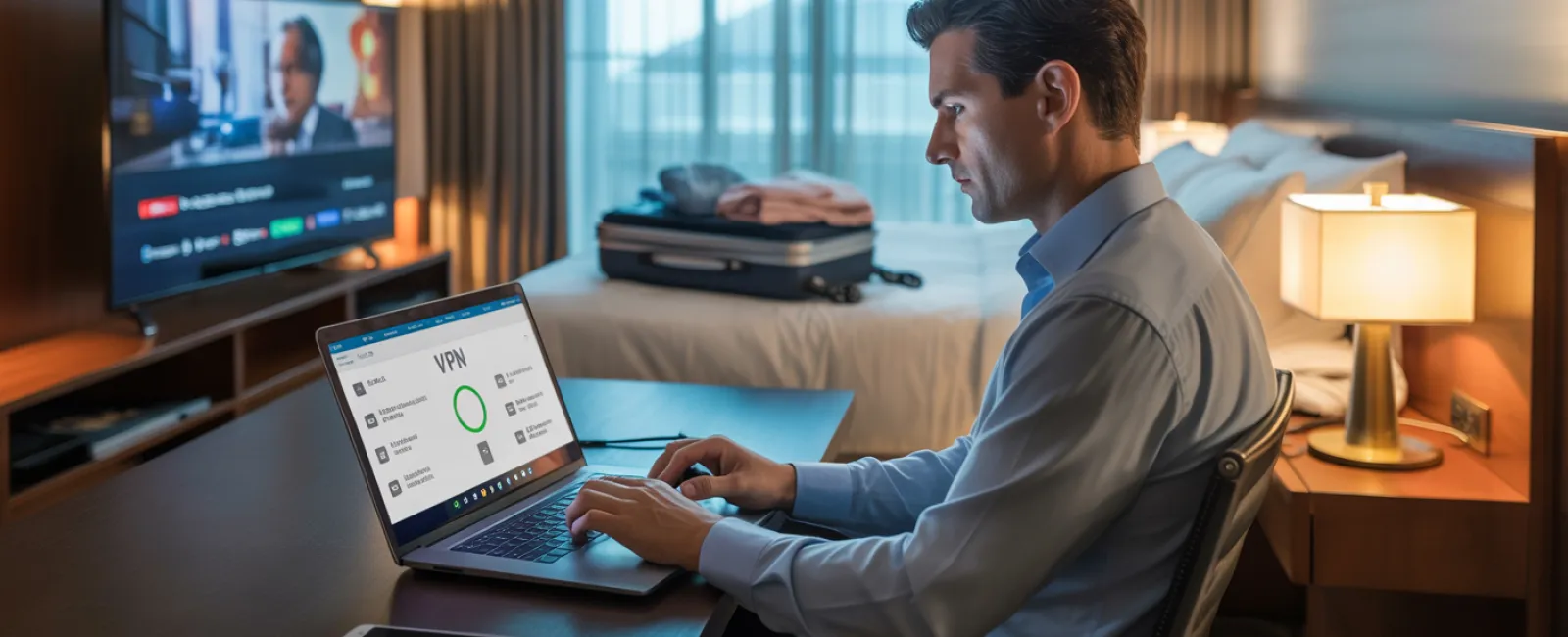
Use a VPN for work access—this encrypts your connection when handling emails or company files.
For sensitive activities like banking, switch to your phone's hotspot instead of risky hotel WiFi.
Separate leisure from work online—let kids stream on hotel WiFi, but use your hotspot for confidential work tasks.
The "Can I Use Your Laptop?" Dilemma
Your work laptop holds critical access to emails, banking, client data, and business systems. Your kids want to watch videos, play games, or video chat.
Why restrict access? Kids may accidentally download harmful software, click malicious ads, share passwords, or stay logged into accounts. While innocent, these actions pose significant security risks on a work device.
Best practice:
Politely refuse work device access—"This is my work laptop, but you can use [another device]." Consistency is key.
If sharing is unavoidable:
- Set up a restricted user account with limited permissions
- Supervise their activity closely
- Prohibit downloads
- Never save their passwords on your device
- Clear browser history after use
Better solution: Travel with a dedicated family device—an older tablet or laptop not connected to work accounts works perfectly.
Streaming on Hotel TVs: Remember to Log Out
Your family wants to enjoy Netflix on the hotel smart TV. Someone logs in with your account, but after checkout, you forget to log out.
What could happen? The next guest gains access to your streaming accounts—and if you reuse passwords (hope not!), it could jeopardize other services.
Preventive Measures:
- Use your personal device and cast content to the TV for safer streaming
- If you log in on the TV, set a reminder on your phone to log out before checkout
- Even better: Download shows to your devices in advance and skip hotel TV streaming
Avoid logging into the following on hotel TVs:
- Banking applications
- Work-related accounts
- Email services
- Social media platforms
- Any account with saved payment information
Lost Device? Act Fast
Holiday travel can be hectic—devices are easily misplaced in restaurants, hotels, cars, or airport checkpoints. If a device goes missing:
Within the first hour, you should:
- Use "Find My Device" features to locate it immediately
- If recovery isn't possible, remotely lock it to prevent unauthorized access
- Change passwords on critical accounts from another secure device
- Notify your IT team or managed service provider to revoke company system access
- If it contained sensitive business data, promptly inform affected clients or partners
Before traveling, ensure your device has:
- Remote tracking enabled
- Strong password protection
- Automatic encryption of stored data
- Ability to perform remote wipe if necessary
Family devices lost? Apply the same precautions: lock them remotely, change passwords, and try locating them.
Rental Car Data Risks
Connecting your phone to a rental car's Bluetooth to play music or use GPS can unintentionally leave behind personal info like contacts, recent calls, and text previews.
This data often remains accessible to the next renter.
Quick 30-Second Cleanup Before Returning the Car:
- Delete your phone's connection from the car's Bluetooth settings
- Clear recent GPS destinations
- Or avoid connection altogether by using an aux cable or offline methods
Balancing Work and Vacation
You intended pure family time but found yourself checking emails obsessively, taking work calls, and spending hours on your laptop while others enjoy activities.
This split focus increases security risks—distractions lead to careless clicks or unsafe network use.
To manage this:
- Set specific times to check work emails, maximum twice daily
- Use your phone's hotspot for work tasks; avoid public or hotel WiFi
- Work in private spaces like your hotel room, not visible public areas
- Be fully engaged when with your family—resist multitasking
Ultimately, the best security strategy is proper downtime. Business won't collapse in a week, and you'll return refreshed and more security-conscious.
Adopt a Holiday Security Mindset
The truth is, mixing work and family during holidays can be chaotic. Sometimes your child genuinely needs your laptop. Sometimes you must urgently check an email. Life isn't perfect.
The aim is not perfection but smart risk management:
- Prepare your devices thoroughly before travel
- Know which activities carry higher risk (e.g., banking over public WiFi) and which are safer
- Establish clear barriers between work information and family time
- Have a plan to act swiftly if something goes wrong
- Learn when to say, "This device is off-limits," and stand firm
Create Happy Holiday Memories, Not Security Nightmares
The holidays should focus on cherishing time with loved ones—not anxiety over a data breach or scrambling to explain compromised client info.
With a bit of preparation and clear rules, you can safeguard your business without spoiling the vacation. Your family enjoys the break, your business stays protected—everyone benefits.
Need assistance establishing travel security protocols for yourself and your team? Click here or call us at 920-818-0900 to schedule your free 15-Minute Discovery Call. We'll help craft practical security policies that keep your business safe without complicating travel.
Remember: The best holiday stories don't involve "the year Dad's laptop got hacked."


